Loan Origination System vs Core Banking System: Complete Comparison Guide
Loan Origination System vs Core Banking System: Complete Comparison Guide
Digital transformation is reshaping how financial institutions deliver lending and banking services. Customers now expect instant loan approvals, digital onboarding, paperless documentation, mobile banking, and real-time account management. To meet these expectations, Banks, Non-Banking Financial Companies (NBFCs), Microfinance Institutions (MFIs), SACCOs, Credit Unions, Cooperative Banks, and FinTech companies are investing in specialized technology platforms that automate and streamline banking operations.
Among the most important technologies in a modern banking ecosystem are the Loan Origination System (LOS) and the Core Banking System (CBS). Although these systems frequently work together, they serve different purposes within a financial institution. Understanding their roles is essential when planning digital transformation, implementing lending solutions, or modernizing Core Banking infrastructure.
A Loan Origination System focuses on the pre-disbursement phase of lending. It manages customer onboarding, loan applications, document collection, identity verification, credit assessment, underwriting, approval workflows, and loan disbursement. Its primary objective is to automate the lending process, reduce approval times, improve customer experience, and increase operational efficiency.
A Core Banking System serves as the operational backbone of a financial institution. It manages customer accounts, deposits, savings, loans, payments, accounting, financial transactions, regulatory reporting, branch operations, and digital banking services. Unlike an LOS, a Core Banking System supports multiple banking products and manages customer relationships throughout the banking lifecycle.
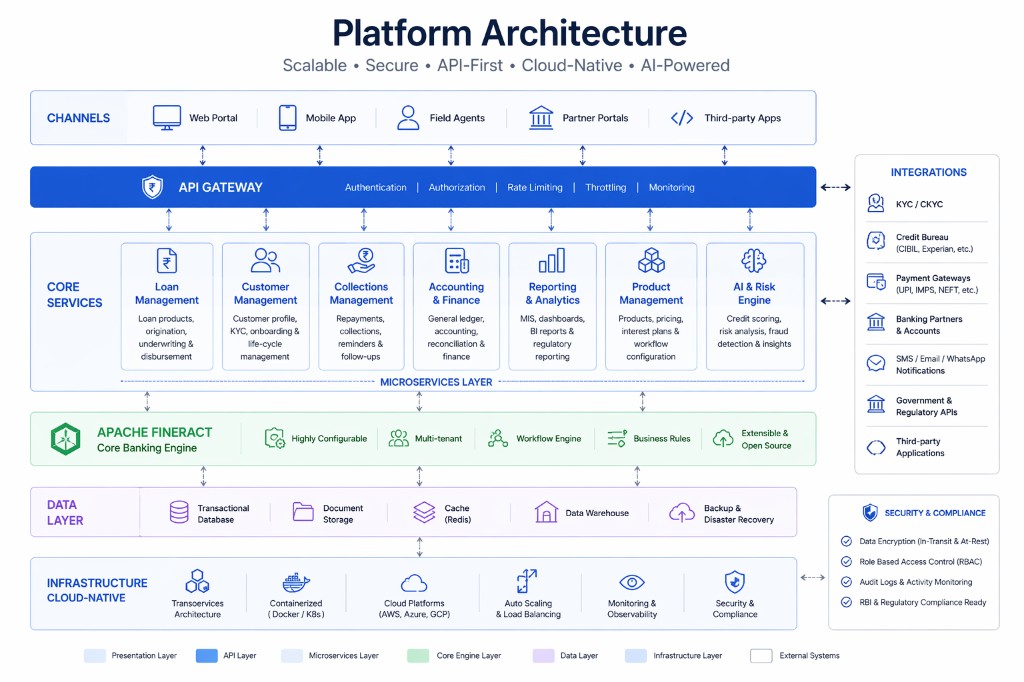
Modern financial institutions integrate Loan Origination Systems with Core Banking platforms, Loan Management Systems (LMS), Banking APIs, Digital Onboarding platforms, payment gateways, Customer Relationship Management (CRM) systems, credit bureaus, analytics platforms, fraud detection solutions, mobile banking applications, and cloud infrastructure to create a unified digital banking ecosystem.
This guide compares Loan Origination Systems and Core Banking Systems across functionality, architecture, workflows, integrations, automation, scalability, compliance, implementation, and long-term business value to help financial institutions choose the right technology strategy.
Whether your institution is launching digital lending services, modernizing a legacy Core Banking platform, or implementing a complete digital banking ecosystem, understanding the relationship between LOS and Core Banking is essential for long-term success.
Internal Link:
https://intelligrow.co/blog/core-banking-software/
What is a Loan Origination System (LOS)?
A Loan Origination System is software designed to manage every activity before a loan is disbursed.
Its primary objective is to automate customer acquisition and loan approval.
Typical capabilities include:
- Digital Loan Applications
- Customer Registration
- eKYC Verification
- Document Upload
- Credit Assessment
- Underwriting
- Approval Workflows
- Loan Documentation
- Digital Signatures
- Loan Disbursement
An LOS reduces manual effort while accelerating loan approvals.
Internal Link:
https://intelligrow.co/blog/loan-origination-system-guide/
What is a Core Banking System?
A Core Banking System manages day-to-day banking operations.
It serves as the central platform supporting banking products and customer accounts.
Typical capabilities include:
- Customer Management
- Savings Accounts
- Current Accounts
- Fixed Deposits
- Loan Accounts
- Payments
- Accounting
- Branch Banking
- Financial Reporting
- Mobile Banking Integration
A Core Banking platform manages customer relationships throughout their banking lifecycle.
Internal Link:
https://intelligrow.co/blog/core-banking-software/
Loan Origination System vs Core Banking System: Key Differences
| FeatureLoan Origination System (LOS)Core Banking System | ||
| Primary Purpose | Loan Acquisition | Banking Operations |
| Customer Onboarding | Yes | Yes |
| Digital Loan Applications | Yes | Limited |
| eKYC Verification | Yes | Supported through Integration |
| Credit Assessment | Yes | Not Primary Function |
| Underwriting | Yes | No |
| Loan Approval | Yes | Receives Approved Loan |
| Loan Disbursement | Yes | Records Loan Account |
| Savings Management | No | Yes |
| Deposit Management | No | Yes |
| Payments | Limited | Yes |
| Accounting | Limited | Comprehensive |
| Customer Lifecycle | Loan Journey | Complete Banking Relationship |
The two systems complement one another and are often integrated to deliver seamless lending operations.
Why Financial Institutions Need Both Systems
A Loan Origination System and a Core Banking System serve different but complementary roles.
Using both systems enables institutions to:
- Digitize Customer Onboarding
- Accelerate Loan Processing
- Improve Customer Experience
- Reduce Manual Operations
- Automate Banking Transactions
- Strengthen Regulatory Compliance
- Increase Operational Efficiency
- Improve Portfolio Visibility
Together they create a complete digital lending and banking ecosystem.
Lending Workflow Comparison
Loan Origination System Workflow
The LOS manages the lending journey before loan servicing begins.
Step 1: Customer Application
Borrowers submit:
- Personal Information
- Employment Details
- Income Information
- Loan Requirements
- Supporting Documents
Digital applications reduce paperwork and improve accessibility.
Step 2: Identity Verification
The LOS performs:
- eKYC
- Identity Verification
- Address Verification
- Document Validation
Automated verification speeds up onboarding while reducing fraud risks.
Step 3: Credit Assessment
The system evaluates:
- Credit History
- Repayment Capacity
- Income Stability
- Risk Profile
- Eligibility Criteria
Automated credit analysis supports consistent lending decisions.
Step 4: Underwriting
The underwriting process includes:
- Risk Assessment
- Business Rules
- Policy Validation
- Approval Matrix
- Exception Handling
Workflow automation reduces processing delays.
Step 5: Loan Approval & Disbursement
Approved applications proceed to:
- Agreement Generation
- Digital Signatures
- Final Approval
- Loan Disbursement
After disbursement, customer and loan information is transferred to the Core Banking System and Loan Management System where applicable.
Core Banking Workflow
The Core Banking platform manages banking relationships after customer onboarding.
Customer Account Management
Supports:
- Savings Accounts
- Current Accounts
- Fixed Deposits
- Loan Accounts
Customer accounts are centrally maintained.
Transaction Processing
The system manages:
- Deposits
- Withdrawals
- Transfers
- Interest Posting
- Payment Processing
Real-time transaction processing supports daily banking operations.
Accounting
Automatically manages:
- General Ledger
- Journal Entries
- Trial Balance
- Financial Statements
Integrated accounting improves operational accuracy.
Customer Servicing
Supports:
- Account Statements
- Balance Enquiries
- Interest Certificates
- Transaction History
- Customer Support
Self-service banking improves customer satisfaction.
API and Integration Comparison
Both systems integrate with modern banking technologies.
Typical integrations include:
- Loan Management Systems (LMS)
- Banking APIs
- Payment Gateways
- Mobile Banking
- Internet Banking
- Customer Relationship Management (CRM)
- Credit Bureaus
- Digital Onboarding Platforms
- Analytics Solutions
- Fraud Detection Systems
API-first integration ensures smooth information flow across banking operations.
Advantages of Loan Origination Systems
Organizations implement LOS because it provides:
- Faster Loan Processing
- Automated Underwriting
- Digital Customer Onboarding
- Reduced Manual Work
- Improved Approval Speed
- Better Customer Experience
- Workflow Automation
- Higher Operational Efficiency
Advantages of Core Banking Systems
Organizations implement Core Banking because it provides:
- Centralized Banking Operations
- Customer Account Management
- Deposit Management
- Payment Processing
- Accounting Automation
- Regulatory Reporting
- Multi-Branch Banking
- Customer Lifecycle Management
Common Challenges
Loan Origination System Challenges
Organizations should prepare for:
- Credit Policy Configuration
- Workflow Design
- API Integration
- Employee Training
- Change Management
Core Banking Challenges
Organizations should consider:
- Legacy System Modernization
- Data Migration
- Infrastructure Planning
- Integration Complexity
- Regulatory Compliance
- Upgrade Management
Understanding the distinct responsibilities of Loan Origination Systems and Core Banking Systems helps financial institutions design an integrated digital lending ecosystem that improves operational efficiency, customer experience, and long-term business growth.
Internal Link:
https://intelligrow.co/blog/loan-management-system-guide/
Total Cost of Ownership (TCO): Loan Origination System vs Core Banking System
When implementing lending technology, financial institutions should evaluate the Total Cost of Ownership (TCO) rather than focusing only on software acquisition costs. TCO includes implementation, licensing, infrastructure, integrations, maintenance, customization, upgrades, support, training, and long-term operational expenses.
Loan Origination System (LOS) Cost Structure
Typical investment areas include:
- Business Analysis
- Workflow Design
- Credit Policy Configuration
- Digital Onboarding
- API Integrations
- Credit Bureau Integration
- Document Management
- User Training
- Support & Maintenance
An LOS helps reduce operational costs by automating manual loan processing and improving approval efficiency.
Core Banking System Cost Structure
Typical investment areas include:
- Core Banking Implementation
- Infrastructure
- Customer Data Migration
- Product Configuration
- Banking API Integration
- Accounting Integration
- Security Controls
- Regulatory Reporting
- Managed Support
Since a Core Banking System supports the entire banking operation, implementation is generally broader in scope than an LOS deployment.
Cloud, AI and Digital Lending Strategy
Modern lending requires intelligent automation and scalable infrastructure.
Cloud Deployment
Both LOS and Core Banking Systems support:
- Public Cloud
- Private Cloud
- Hybrid Cloud
- High Availability
- Disaster Recovery
- Automated Backup
Cloud deployment enables institutions to launch lending products faster while improving scalability and business continuity.
Artificial Intelligence (AI)
Modern lending platforms can integrate AI for:
- Credit Scoring
- Fraud Detection
- Income Verification
- Risk Assessment
- Customer Segmentation
- Predictive Analytics
- Collection Prioritization
AI improves lending decisions while reducing manual intervention.
Banking APIs
Both systems integrate with:
- Loan Management Systems (LMS)
- Banking APIs
- Payment Gateways
- Mobile Banking
- Internet Banking
- CRM Platforms
- Digital Onboarding
- Analytics Platforms
- Third-Party Services
API-first architecture enables seamless communication across banking applications.
Scalability Comparison
Financial institutions require systems that support future growth.
Loan Origination System Scalability
An LOS supports:
- High Application Volumes
- Multiple Loan Products
- Branch Expansion
- Digital Channels
- Automated Workflows
- Cloud-Native Scaling
Institutions can rapidly introduce new lending products without significantly changing operational workflows.
Core Banking Scalability
A Core Banking platform supports:
- Multi-Branch Banking
- Multi-Currency Operations
- Multi-Language Support
- Enterprise Banking
- Large Customer Bases
- High Transaction Volumes
It serves as the long-term operational backbone for financial institutions.
Security Comparison
Security is essential throughout the customer and lending lifecycle.
Identity & Access Management
Both systems should implement:
- Multi-Factor Authentication (MFA)
- Role-Based Access Control (RBAC)
- Single Sign-On (SSO)
- Password Policies
- Session Management
These controls help protect customer data and operational systems.
Data Protection
Both platforms can implement:
- Encryption at Rest
- Encryption in Transit
- Secure API Authentication
- Database Encryption
- Backup Encryption
Effective security depends on implementation quality, governance, and operational controls.
Audit & Monitoring
Both systems should maintain audit logs for:
- Customer Activities
- Loan Applications
- Loan Approvals
- Financial Transactions
- User Access
- Administrative Changes
Audit trails improve operational transparency and regulatory compliance.
Regulatory Compliance
Both Loan Origination Systems and Core Banking Systems can support compliance with financial regulations when properly configured.
Typical compliance areas include:
- Know Your Customer (KYC)
- Electronic KYC (eKYC)
- Anti-Money Laundering (AML)
- Customer Due Diligence (CDD)
- Data Privacy Regulations
- Financial Reporting
- Audit Logging
- Applicable Central Bank or Financial Authority Guidelines
Compliance depends on governance, implementation, and operational procedures rather than the platform itself.
When Should You Choose a Loan Origination System?
An LOS is often the right choice if your institution wants to:
- Digitize loan applications
- Reduce loan approval time
- Automate underwriting
- Improve customer onboarding
- Increase lending efficiency
- Reduce paperwork
- Improve approval consistency
It is particularly valuable for:
- Banks
- NBFCs
- MFIs
- SACCOs
- Credit Unions
- Cooperative Banks
- Digital Lenders
- FinTech Companies
When Should You Choose a Core Banking System?
A Core Banking System is essential if your institution needs to:
- Manage customer accounts
- Handle deposits and savings
- Process daily transactions
- Maintain accounting records
- Support payments
- Deliver digital banking services
- Manage complete customer relationships
Every financial institution requires a Core Banking platform, while an LOS enhances the lending lifecycle.
Why Choose Intelligrow for Digital Lending & Core Banking?
Implementing lending and banking technology requires expertise in business processes, APIs, cloud infrastructure, integrations, cybersecurity, and regulatory compliance.
Intelligrow helps Banks, NBFCs, MFIs, SACCOs, Credit Unions, Cooperative Banks, NGOs, and Financial Institutions build complete digital lending ecosystems.
Our services include:
- Loan Origination System (LOS) Implementation
- Loan Management System (LMS) Implementation
- Core Banking Implementation
- Mifos & Apache Fineract Consulting
- Banking API Development & Integration
- Digital Onboarding Solutions
- Credit Bureau Integration
- Mobile Banking Solutions
- Cloud Deployment & DevOps
- Core Banking Modernization
- Security & Compliance Consulting
- Managed Support & Maintenance
We help financial institutions accelerate lending, improve customer experiences, strengthen compliance, and build scalable digital banking platforms.
Loan Origination System vs Core Banking System Evaluation Checklist
| ActivityStatus | |
| Business Requirements Documented | ☐ |
| Lending Workflow Defined | ☐ |
| Core Banking Requirements Finalized | ☐ |
| Integration Requirements Identified | ☐ |
| API Strategy Prepared | ☐ |
| Security Controls Designed | ☐ |
| Compliance Requirements Validated | ☐ |
| Performance Testing Completed | ☐ |
| User Acceptance Testing (UAT) Completed | ☐ |
| Employee Training Conducted | ☐ |
| Production Go-Live Approved | ☐ |
| Monitoring Enabled | ☐ |
Conclusion
Loan Origination Systems and Core Banking Systems perform different but complementary roles within a financial institution. A Loan Origination System focuses on acquiring borrowers, automating loan applications, streamlining underwriting, and accelerating loan approvals. It enhances customer onboarding and improves operational efficiency during the pre-disbursement phase of the lending lifecycle.
A Core Banking System serves as the foundation of banking operations by managing customer accounts, deposits, payments, accounting, and financial transactions throughout the customer relationship. It supports multiple banking products and provides the centralized platform required for daily banking activities.
Rather than replacing one another, these systems work together to deliver an end-to-end digital lending ecosystem. Integrating an LOS with a modern Core Banking platform enables institutions to automate lending, improve customer experiences, reduce operational costs, strengthen regulatory compliance, and scale their digital banking services.
Partnering with an experienced technology provider like Intelligrow ensures successful implementation, seamless integration, and long-term optimization of both Loan Origination and Core Banking solutions.
Useful Internal Links
Loan Origination System Guide
https://intelligrow.co/blog/loan-origination-system-guide/
Loan Management System Guide
https://intelligrow.co/blog/loan-management-system-guide/
Core Banking Software
https://intelligrow.co/blog/core-banking-software/
Digital Lending Transformation
https://intelligrow.co/blog/digital-lending-transformation/
Banking APIs
https://intelligrow.co/blog/banking-apis/
Cloud Banking
https://intelligrow.co/blog/cloud-banking/
Apache Fineract Guide
https://intelligrow.co/blog/apache-fineract-guide/
FAQ
Frequently asked questions
A Loan Origination System manages the loan lifecycle before disbursement, including applications, underwriting, approval, and documentation. A Core Banking System manages customer accounts, deposits, transactions, payments, accounting, and ongoing banking operations after the loan is created.
About Intelligrow
Experts in Digital Lending & Core Banking
Intelligrow helps banks, NBFCs, microfinance institutions, fintechs and digital lenders modernize their technology using Mifos, Apache Fineract, digital lending platforms and core banking solutions.
Our team provides implementation, customization, migration, API integrations, cloud deployment and long-term support for financial institutions across multiple countries.